English / Comp Lit 288: Postwar
American Poetry (1945-1975)
Charles Bernstein
Spring 2018
T/Th 3pm
FBH 222
(my office is next door in FBH 221)
Introduction
Requirements
The first thing to do is subscribe to the course Discussion list (via Google groups): re-wreading.
•email to list: re-wreading -- @ -- sas.upenn.edu

under constuction
Required books:
Norton Anthology of Postmodern Poetry, ed. Paul Hoover, 2d edition
Michael Palmer, Codes Appearing: Poems 1979-1988 (New Directions)
(some copies at Penn Book Center, check there first & support our local independent bookstore)
RECOMMENDED:
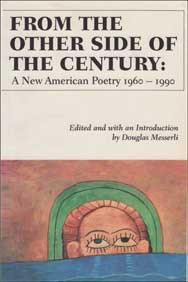
From the Other Side of the Century, ed. Douglas Messerli: pdf
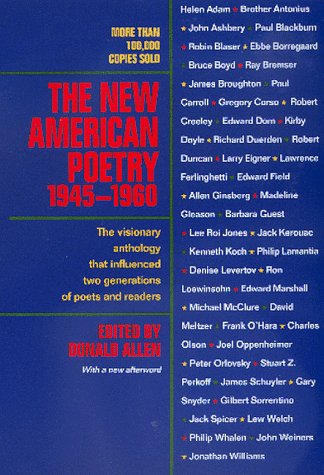
Tne New American Poetry 1945-1960 (1960). ed. Don Allen
Please be sure to notify me of any broken links -- AS SOON AS YOU NOTICE
Please note: The syllabus remains under construction through the semster. Stay tuned for changes.
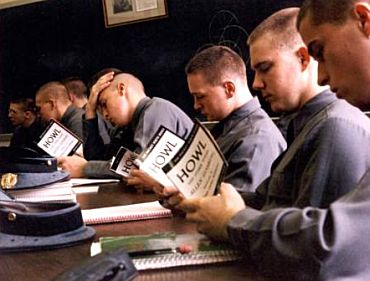
 reading highlight
0. (Jan. 11): Introduction
Before this first class. try a Poem Profiler self-test: fill out the profiler in the abstract, to reflect your own preferences (see "course requirements"), and post to the list.
Upcomning poetry readings at 6:30pm at Kelly Writers House:
1. (Jan. 16 & 18): Charles Olson (1910-1970) (EPC page)
Hoover: poems (p. 3) & poetics (p. 863)
respondent: Jan. 16: Jackson & Kelly; Jan. 18: Emily
"Letter # 41 [broken off]" [Maximus II:1](text: scroll down to "with a leap")
"Maximus, to Gloucester, Letter 27 [withheld]" [Maximus II:14-15] text) & note PoemTalk episode on this poem
(1966 from USA Poetry/NET)
"The Librarian" [Collected Poems 412-14] (text) (1966):
"Maximus, to Himself" ["I have had to learn the simplest things last"] (1:43): MP3 | text (also in Hoover)
***
Robert Creeley: Introduction to Charles Olson: Selected Writings II
George Butterick DLB/Gale intro
Hoover: Olson's poetry and poetics
(Note Maximus is on-line at LION)
"Projective
Verse" (1950) (Poetry Foundation annoted version on multiple pages)
Creeley on Olson
La Préface (c. 1946) (LION)
The Kingfishers (6:31) (audio/partial); text (1949): "The Kingfishers" (at LION); my commentary
"In Cold Hell, in Thicket" via LION (also in Hoover)
Maximus "Letter 6" via LION
Poetry Foundation: bio; poems:
The Songs of Maximus: Song 1
The Songs of Maximus: Song 2
I, Maximus of Gloucester, to You (text in Hoover)
Maximus, to Gloucester: Letter 2
Extracts from Maximus (including visual pages)
Audio: Olson at PennSound:
SF 1957: I,
Maximus of Gloucester, to You [I.1] (4:01)
Onward (optional reading/listening):
PoemTalk program on Olson
"Proprioception"
Creeley on Olson:
Charles Olson: In Cold Hell, in Thicket,
Charles Olson: The Maximus Poems, 1–10,
Some Notes on Olson's Maximus,
Introduction to Charles Olson: Selected Writings I,
A Foot Is to Kick With,
An Image of Man . . .": Working Notes on Charles Olson's Concept of Person, Charles Olson's Masterwork
•Pick the poem you like best and use the profiler on this poem.
•"The Kingfishers" can be seen as an inaugural poem for the postwar era/error and for the New American poetry. In what ways does this mark its historical moment? Also in "I, Maximus ... to You," Olson writes about "pejorocracy" (the
worsening rule of government): what is his political and social
attitude? Who is the "you" in this poem? What is "polis" in Maximus Letter 6 ("polis is eyes"?)
•"Projective Verse" is one of the most influential essays of the period. What's "new" about it (if anything), what seems "old" about it now (if anything)? How does the essay connect to the poems and how not? What about the style of the essay: some find it inspiring, as giving permission, others hectoring or too heavy or pretentious. What do you think?
•The spoken/oral marks many of these poems: discuss this approach versus more traditional "literary" work
•What are you able to say about the poetics or the poetic
values these poets articulate?
•Discuss Olson's readings via the audio recordings: how does it compare to the
printed text?
•What do you think of the gender poetics in Olson, of his insistence, often, on a man speaking to men. I did my own "wreading" piece on this, related to this quesiton, which may be of interest (optional!): "Introjective Verse" (alt link).
Wreading:
•Take all our part of your journal response and cast is into a "projecctive poem" (for example cast your response as a spoken rather than written work; break your phrases up into a "field" arrangement all over the page ...
•Write a poem using some of the techniques you have gleaned
from “Projective Verse”: line as breath, parataxis.
Write a poem with the visual layout and “breath” breaks
of Olson's “field” poems, possibly using materials
from anthology or web poems, e.g. score “Projective Verse” as
a projective poem.
::Be sure to comment on your results.
2. (Jan. 23/25) Robert
Creeley (1926-2005) (EPC page)
Respondent: Arundati (1/23)
<digital versions of Creeley's poems on LION via library e-resources>
My Creeley introduction/obit
futher intros --optional! -- Gale/DLB by Loss Pequeno Glazier
& 2 earlier piece of mine: "Hearing Here" & "Creeley's Eye"
*
Creeley in Hoover: poetry and poetics
*
Creeley Poetics:
"A Note"
"A Sense of Measure"
"Poems Are a Complex"
"I'm given to write poems" [also: pdf]
Was That a Real Poem or Did You Just Make It up Yourself?
Extentions: Creeley on the commonplace
*
My Creeley selection at the Poetry Foundation:
& here is the audio for most of those:
A Token (0:19)
The Warning (0:23) (text)
"The Language": 1963 (U of AZ); 1965 (Berkeley Poetry Conference); 1975 (S-Press); 1984 (MLA, DC); 1986 (Germany)
The Measure (0:26)
*
"I Know a Man" (PoemTalk on this poem); Brian Kim Stefans's digital version
PLUS Machine-aided version (we will discuss in class)
"The Plan Is the Body"
Additional Creeley
Selection
*
Creeley PennSound:
LineBreak Program (my conversations with Creeley) at top of page
various readings of "I Know A Man" at top of page
Oh No (0:36); & also Oh No (0:31) :text
For Love (8:21)
The
Warning (0:15) (text)
A Tally (1:31); A Tally (1:33)
Words (0:47) :text
The Plan Is the Body (from Away) (4:30): text
Anger (6:10) text
The Hole (3:05)
A Piece (0:16)
A
Tally (1:33)
" 'Time' is some sort of hindsight" ... (from Pieces): text
*
By way of contrast:
W.D. Snodgrass (1926-2009)
"Heart's Needle" (1959)
•Pick the poem you like best and least; discuss.
•Does Creeley come close to spoken/vernacular American English? How about compared to Olson? In terms of diction: which of Creeley's poems come closest to spoken
American English, which the least? Is this a value you like or
don’t like in poetry?
•Pick a poem give a brief summary of the content. How is
this summary different from the poem?
•How about the relation of Creeleys’ poetics
to his poems? Discuss Creeley's poetics: how to they depart from a more traditional idea of poetry?
•What function does Creeley’s
short lines serve?
•What is the role of improvisation and jazz in Creeley's poetry and poetics? In what way can the concept of improvisation differ in music and in writing. What is the value of improvisation, in Creeeley's sense: contrast with the kind of expository writing you learn in comp classes but also the making of a formal poem with fixed theme and prosodic structure,
•Discuss the audio recordings: how does it compare to the
printed text?
•Discuss Creeley's essays, for example on Olson (see last week's reading)
•Creeley and Olson (sometimes referred to as Black Mountain or New American poets) are sometimes seen as writing "open" form works, in contrast to "closed" (or traditional, metrical) forms, a difference sometimes referred to as "the raw vs. the cooked." Contrast Snodgrass's poem from 1959 with Creeley's early poems (from the same period) (note that the two poets are borth born in 1926). Is raw/cooked useful? What are the virtues or limitations of each? Which do you prefer?
Wreading:
• Write a Creeley “thin” poem, that is one with
very short lines (imitation). Take a poem from someone else and re-write in a Creeley manner.
• Take a poem with longer lines from the anthology
or from another period in English literarture (try with a historical poem) and rebreak the lines in the manner of Creeley.
::Be sure to comment on your results.
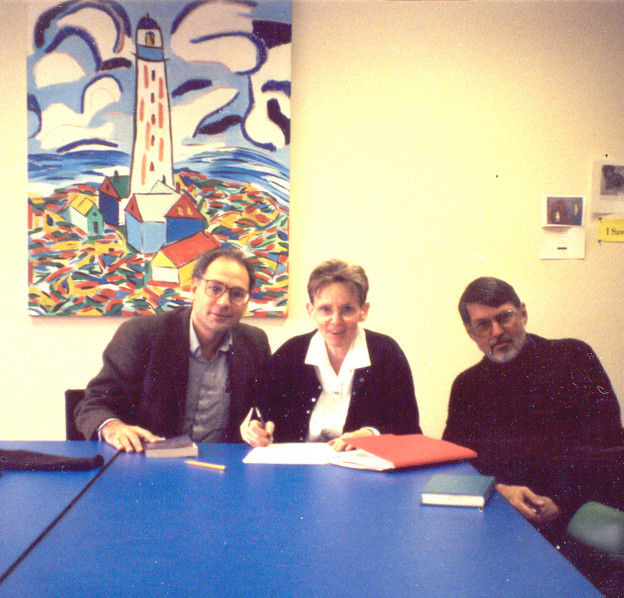
Creeley and Susan Howe with me in my office in Buffalo, Dec 1992
3 (Jan 30 & Feb. 1) Duncan, Spicer, Blaser
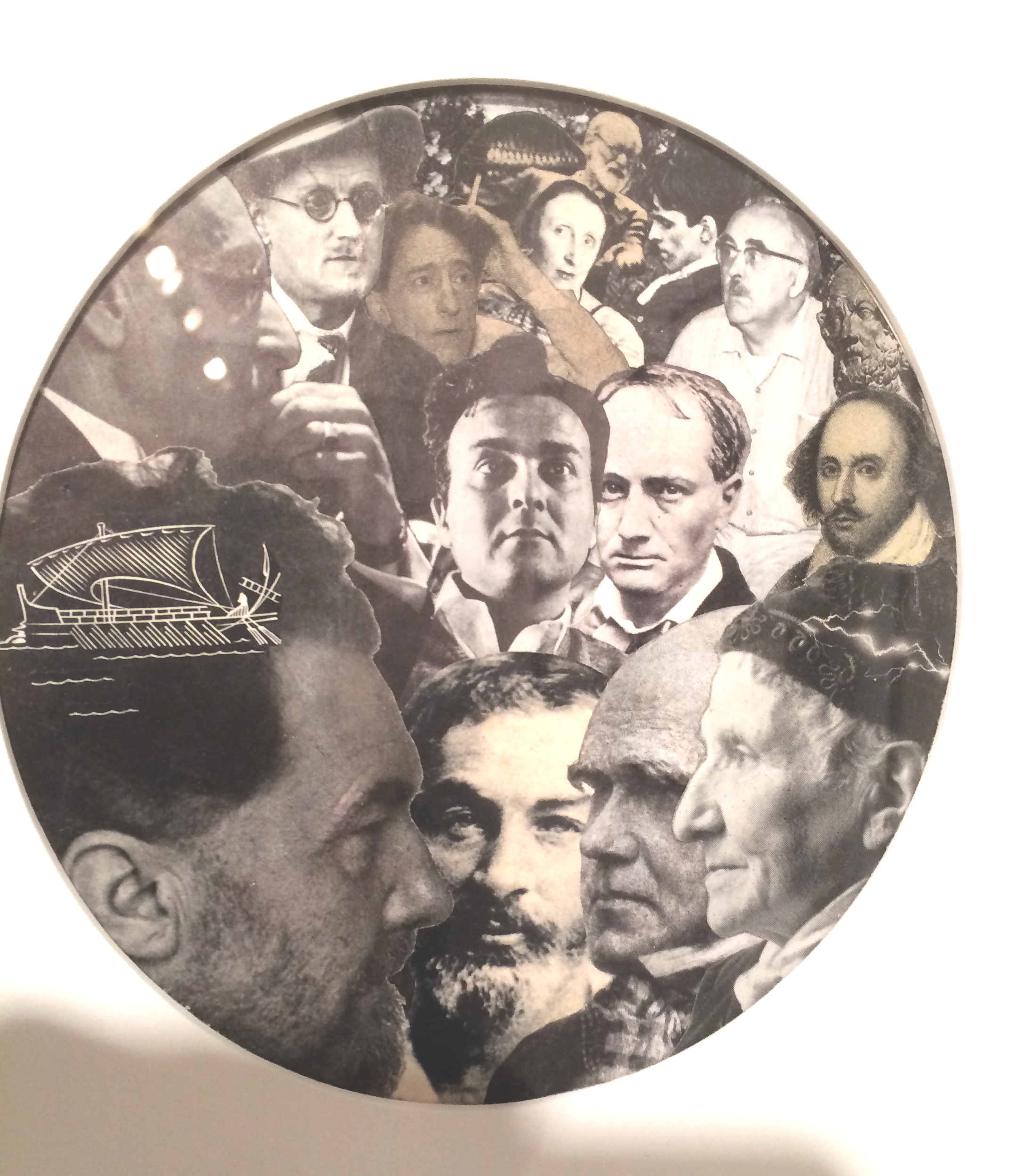
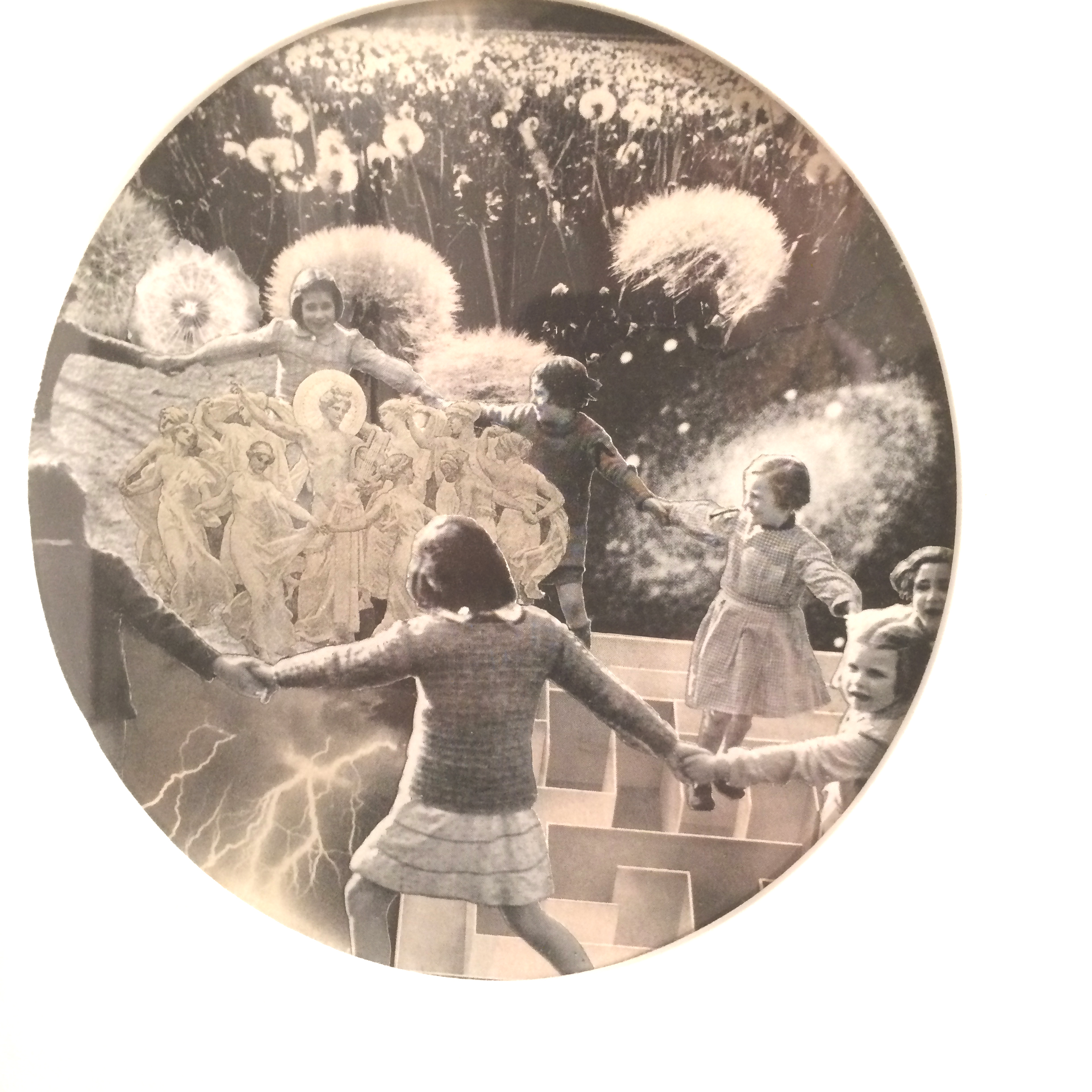
two 1989 images by Jess: Duncan with great companions and "a children's game of ring a round of roses told"
Robert Duncan (1918-1988) (EPC page)
DLB/Gale intro by Michael Davidson
Hoover: poetry and poetics for Duncan
Duncan on PennSound
“My Mother
Would Be a Falconress” (text and audio from Poets.org)
"Often I Am Permitted" (text) (text in Hoover too): &
audio:
San Francisco State University
1959: MP3 &
Berkeley/1965: MP3
optional: discussion of this poem on PoemTalk; Peter O'Leary on this poem at Poetry Fdn
Duncan Poems at Poetry Foundation:
A Poem Beginning with a Line from Pindar
An African Elegy
Such Is the Sickness of Many a Good Thing
Poetics: “The Homosexual in Society”(1944)
*
Further Duncan reading (optional)
Poetry Foundation intro
MAPS intro
Cary Nelson on "Often I Am Permitted"
Three views of "My Mother Would Be a Falconress"
++++++++++++++++
Jack Spicer (1925-1965) (EPC page)
note extensive critical materials at Gale LRC, e.g. Ed Foster DLB intro
Spicer in Hoover
Language at LION
Two poems from Language: Thing Language & SPORTING LIFE
(Note: LION version of "Sporting Life" drops stanza breaks; see Poetry Foundation version.]
On dictation from the Vancouver lectures
Spicer at PennSound: listen to the 1975 program/reading of "Language"
"Dear Robin"
"Ode to Walt Whiman" (after Lorca)
++++++++++++++++
Robin Blaser (1925-2009) (EPC page)
my intro (& an earier one)
intro by Mirian Nichols
Blaser poetry selection
two short late poems
Blaser, "Practice of Outside" (LION)
Blaser, "The Violets: Charles Olson and Alfred North Whitehead" (1983), from The Fire
•Pick two poems you like best and least. Why? Use the profiler
on the two poems.
•Does Duncan's being gay make a difference; see for example his important essay "Homosexual in Society" from 1944; note that thsi essay caused John Crowe Ransom to cancel the publication of Duncan's "African Elegy" from the Kenyon Review. Does that affect the meaning of the poem? How about Spicer, Blaser?
•Duncan writes: "The grace of the poem, the voice,
comes from a will that strives to waken us from our own personal
will, [the poet] strives to waken to the will of the poem, even
as the poems strives to waken that will" ("Essay in
Essential Autobigraphy, Truth & Life of Myth). Discuss,
thinking of both Duncan's sense of the poem as dervivative and
Spicer's sense of the poem as received as if by radio transmission,
along with Olson's insistence on avoiding the "lyrical interference
of the ego." (See Scicer "Sporting Life" in "Language": "The poet is a radio. The poet is a liar. The poet is a counterpunching radio.")
•Blaser and Spicer are credited with inventing the "serial" poems. In what way are their poems "serial" (ordered not sequentially but in an open-ended way, averting closure)? (See Blaser's "Practice of Outside.")
•How are Spicer's poems affected by his concept of "dictation"? What is "dictation"? (See Blaser's "Practice of Outside.")
•What are the sexual/gender politics of Spicer's Lorca?
•Dicuss the discursive elements in Blaser's "Even on Sunday" and his Duncan and Dante "companion" poems. How do these discursive elements work in contrast to the more abstract lyric passages in the poems.
•Blaser writes about Olson breaking out of the "Western Box" (in "The Violets"). What does he mean by this?
Wreading:
Serial lines: Select one line each from different source
poems in the reading this week (or from past weeks). Add sentences lines own composition. Combine into one stanza,
reordering to produce different results.
•Reverse the order of the words line for line; reorder the lines, backward to beginning or rearranged.
•Translate one of the poems into a totally contemporary
idiom, including references and diction, as if it applied to you.
::Be sure to comment on your results and post to the listserv.
•
Monday, 2/5 at noon, KWH: USING ELECTRICITY: COMPUTER GENERATED BOOKS Nick Montfort, Allison Parish, and Rafael Pérez y Pérez
•
4. (Feb. 6 and 8) Rich, Plath, Cortez, Lorde
(Rich/Plath Tues, Cortez/Lorde Thurs)
Adrienne
Rich (1929- )
respondent: Amy

Poetry Foundation page
note extensive critical materials at Gale LRC
PennSound
•
from Diving into the Wreck(1973):
"Trying to Talk with a Man" p. 3 of book (link above)
"When We Dead Awaken" p. 5 of the book (link above)
"Diving
into the Wreck" (p. 23 of book): audio at PennSound (3:06): MP3 (INCOMPLETE: final section of poem is cut off) (link above)
"Rape" (also p. 44 of book)
•
"Snapshots
of a Daughter-in-law":
audio (8:12): MP3
As Ever [text] & MP3 [Tribute to Robert Creeley: text of poem]
Poetics:
"When We Dead Awaken: Writing as Revision" (1971 essay) and via JSTOR
"Women and Honor: Some Notes on Lying": pdf (1975)
"Compulsory Heterosexuality and Lesbian Experience" (1975): pdf
from On Lies, Secrets, and Silence: Selected Prose ("Women and Honor: Some Notes on Lying": (1975)
Extensions (optional):
Of Woman Born: Motherhood as Experience and Institution (1975)
Twentieth Century American Poetry has many of Rich's books
++++++++++++++
Sylvia Plath (PF) (1932–1963) & MAPS
Bio/intro and other material at Gale LRC
"Daddy" : text, video
"Lady
Lazarus"
"Mad
Girl's Love Song"
Ariel
++++++++++++++
Audre Lorde (1934-1992)

MAPS intro
(note Collected Lorde is avail. via LION, links here to open web versions where possible)
"Poetry Is Not a Luxury"
More Lorde poetics
"Love Poem"
"Blackstudies"
"Coal" (on "Coal")
"The Black Unicorn"
"A Song for Many Movements": text, audio
"Power"; see note in this web posting of the poem
"Electric Slide Boogie" cp to O'Hara
For the Record
Age, Race, Class and Sex: Women Redefining Difference (1980)
"Master's Tools": pdf
+++++++++++++
Jayne Cortez (1936-2012)

"Rape"
•In Cortez's poem "Rape":
how does the form contribute to the message? What is the message?
What does this work do as a poem differently than an essay on
the same topic? Compare to Adrienne
Rich's "Rape"& to Clayton Eshleman's "Hardball." For
background info on the subject of the poem, see Wikepedia
article on Garcia and on Little. Then compare to Lorde's "Power." In Lorde's "For the Record -- who is Eleainor Bumpers (to whom the poem is dedicated)"; in "Power" -- who is Clifford Glover? How does the poems work vs news account. What about the contrast between Bumpers and Indira Gandhi in "For the Record"? Do these poems (and other related poems from earlier in the semester) hold up "as poems" outside the immediate political issues that generated them? Do the political issues still seem pertinent? What would it mean for a poem to "hold up" beyond its immediate time of composition and subject matter? Is there is a difference between poetry and rhetoric? Cortez's "Rape"raises, in stark terms. the tensions between rhetoric and poetry, in Lord's terms, or as more commonly put, between propaganda/message and aesthetics, or identity politics vs … : dichotomies that are always problematic, which is not to say that aesthetics is not fundamental to the value of a poem. Do you think that Cortez's poem relieses more on political message or, in contrast, on sensation and a woman's revenge fantasy – that is, that its aesthetic force comes from articulating the fantasy not from the political message; or put another way, from it's articulation of a women’s rage. Both the Little and Garcia cases were key to the emerging (!?) recognition of self-defense for women being raped. In the both cases, the women were found not guilty by reason of self-defense, but not without controversial trials. It’s Garcia’s case, where she drove several blocks to find the rapist and kill him, which raises the issue of revenge/vigilante justice for the poem! (even if the specific circumstances of the case exonerated her).
•In what ways is Rich a traditional poet and in what ways is she radical, or does neither term apply?
•What do these poets add to the discussion of the significance of race, gender, or sexual-orientation in reading or writing poems? How does the identity politics of these poems relate to their aesthetic or social value: are those kinds of values different?
•Plath is often read through her autobiography? Are these poems dependent on knowing her life story? Discuss the artifice, or use of form, in her work. How does her work relate to the open form, New American poets?
•Compare the sound of a single poem of the three different poets
from this week's reading.
Wreading:
•Choose of social issues of the present as exemplified in a news story and write a poem based on this.
•Substitution N+7: replace selected words in the poem with a word seven above or seven below in a dictionary. You can also use the engine: but do manually first.
Feb. 14 (note changed date!) Paul Auster 6:30pm at KWH: must reserve: whfellow@writing.upenn.edu
5. (Feb. 13 and 15) Frank O'Hara and John Ashbery
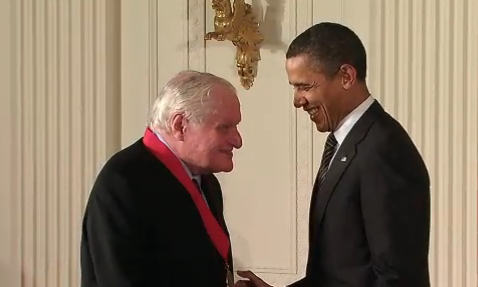
John Ashbery, Feb. 12, 2012 (receiving National Humanties Medal)
Frank O'Hara(1926-1966) (EPC page)
respondent: Arundati
note extensive critical materials at Gale LRC, but start with this Gale/DLB by Bertholf and Butterick)
Hoover O'Hara (and "Personism:
A Manifesto" in Poetics section of anthology)
O'Hara: audio: "Poem" ("Lana
Turner Has Collapsed"): one; also differnt reading of poem: two (Penn only)
- A True Account of Talking to the Sun at Fire Island
- Ave Maria audio
- Having a Coke with You & on YouTube
- Meditations in an Emergency
- Poem [“At night Chinamen jump”]
- Rhapsody
- The Day Lady Died
- Why I Am Not a Painter
- "On Seeing Larry Rivers' Washington Crossing the Delaware at the Museum of Modern Art
O'Hara profile by Moore on YouTube, reads poems and talks
++++++++++++++++++++++++++++++
John Ashbery (1927 - ) (EPC page)
note extensive critical materials at Gale LRC, including intro
Hoover
Poetry Foundation page
respondent: John George
*
Europe [source: Beryl of the Biplane by William Le Queux, 1919]
The Tennis Court Oath
"The Recital" from Three Poems, "A Wave" "Haiku": pdf
Paradoxes and Oxymorons
Chinese Whispers
"The Skaters"; Bernstein on this poem
*
Ashbery at PennSound:
"How Much Longer Will I Be Able to Inhabit the Divine Sepulcher..." (4:29): MP3 / text or here
Rivers and Mountains (3:57): MP3, text
The Instruction Manual (5:28): MP3, text
"They Dream Only of America" (1:09): MP3; text & on the poem
text: "Daffy
Duck in Hollywood": audio: MP3
text: These Lacustrine Cities: audio: MP3
text: Soonest Mended: audio: MP3
text Farm Implements and Rutabagas in a Landscape: audio MP3; discussion
of the poem
text: And Ut Pictura Poesis Is Her Name audio: MP3
*
2011 Time magaine interview with John Ashbery
:::If you find Ashbery frustrating: (1) run the poem profiler on his work in general first (2) try to account for how the work is made (eg collage, etc) not "what it means"
•What similarities and what differences do you see between O'Hara and Ashbery/ Ashbery and the other poets we've read so far this semester? Use Poem Profiler to assess the tone and mood of some of the poems.
•Which of these Ashbery poems do you like best/least? Discuss the role of whimsey and wandering (meandering) thought in Ashbery's poems? Do you find Ashbery's poems difficult? Is difficulty a problem? Take a stanza and try to paraphrase. Compare to what is not paraphrasable.What kind of references and allusions does Ashbery use? Are the poems absorptive or do the resist absorptive reading?
•It is often said that O'Hara and Ashbery (Guest too: NY School) work on the “surface” in
contrast with the “deep” (or "profound") poetics of some of the poets
read earlier (aka Black Mountain poetics of Olson, Creeely, Duncan, Levertov). What is meant by this?
•Which of O'Hara's poems comes
closest to speech/vernacular? What kind of allusions are made?
How does the comic work in these poems? Can serious poems be funny? Compare these poems
to the previous poems in terms of the use of the everyday or
commonplace? Does (what some might call) trivial subject matter make for trivial poems? Who is Lana Turner and what role does she play in O'Hara's "Poem" (two
images may help: still from Peyton Place (1957); still from Douglas Sirk's Imitation of Life (1959).
In "The Day Lady Died" talk about the role of Billie
Holiday (eg "Lady Day"). Contrast the use of these
two figures.
•Ashbery and O'Hara make use of popular (or "low") culture references in their poems, in contrast to the "high" culture references in older or more traditional poetry (Eliot and Pound) or the absence of such references in Williams or Stevens or Stein. Related to this O'Hara is thoguht of as a "coterie" poet because he reference his friends (or the cultural icons of his circle) rather than traditional historical or literary figures (or people who would be known to readers outside his circle). What dost thou think of these possibly anti-literary developments?
Wreading:
• Write a poem in a “novel” form: index, table
of contents, obituary, catalog, resume, course description, an
advertisement for an imaginary or real product, an instruction
manual, a travel guide, a quiz or examination, etc.
• Write a letter poem, as O’Hara’s “Day
Lady Died" poems, possibly
mentioning the names of friends, in the informal manner of O’Hara’s “Personism”.
•Erasure: Take a poem and cross out most of the words on
each poem, retype what remains as your poem. (Cf: Ashbery's "Europe."
::Be sure to comment on your results and post to the listserv.


Feb. 19 at 6 SAWAKO NAKAYASU at KHW
6A. (Feb. 20). James Schuyler and Barbara Guest
James Schuyler(1923-1991) (EPC page)

photo:
O'Hara & Schuyler
respondent: Jackson
note extensive critical materials at Gale LRC. including intro by Joseph Conte (DLB/Gale)
Schuyler at Poetry Foundation
Schuyler at PennSound
BBC interview/reading
Poems in Hoover plus:
Barbara Guest (1920-2006) (EPC page)
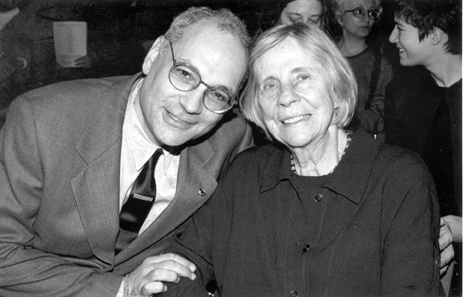
respondent: Jamie
Hoover selection ("Red Lillies")
My Guest intro: Composing Herself
Poetry Fdn intro
Barbara Lundquist intro (DLB/Gale)
Guest: Selection from Messerli anthology
Poetics: "Invisible Architecture"
Poets.Org into/selection
PennSound:
LineBreak
show (my conversation with Guest) (transcript)
Passage (for John Coltrane) (1:21): MP3 (text with sound file)
"An Emphasis Falls on Reality" & MP3
•Detail the visual images in your favorite poems for this
week. Then detail the psychological states/evocations in these
poems.
•Which poems are most like someone speaking and which the
least? How does that affect the value of the poems.
•Discuss a poems or two in terms of "the ordinary."
•What is the significance of jazz for Guest in "Passage." Compare to Creeley's engagement with jazz.
•What does "reality" mean for these two poets?
•Might either of both of these poets be understood as "domestic"? Is this useful/harmful?
•Does it make a difference in your reading of the poems by Guest that she is a woman. What difference? If her poems were written by a man, how would that change the meaning?How about the reverse with Schuyler?
•It is sometimes said that Guest and Schuyler (like New York School friends Ashbery and Guest) work on the “surface” in contrast with the “deep” (aka Black Mountain) poetics of Olson, Creeely, Duncan, Levertov. In particular, Guest is thought of a painterly poet? Is there anything to this distinction? What does painterly or surface mean in Guest's work?
Wreading:
•Negation/Opposites: Negate every phrase or sentence in
the poem or in some way substitute opposite words for selected
words in the source text: "I went to the beach" becomes "I
went to the office"; "I got up" becomes "She
sat down"; "I will" become "I will note",
etc.
•Write a Schuyler-like poem articulating the nonevents of
the everyday (as “Crystal Lithium" in Hoover).
::Be sure to comment on your results.
6B Feb 22. No Class. Watch this movie & comment:
Film: Something Wonderful May Happen: iNels Plenge, Lars Movin, and Thomas Thurah (2001) on the New York School, documentary (Ashbery, O'Hard, Koch)
No class discussion on this but do comment on the list:
Whalen vs Berryman
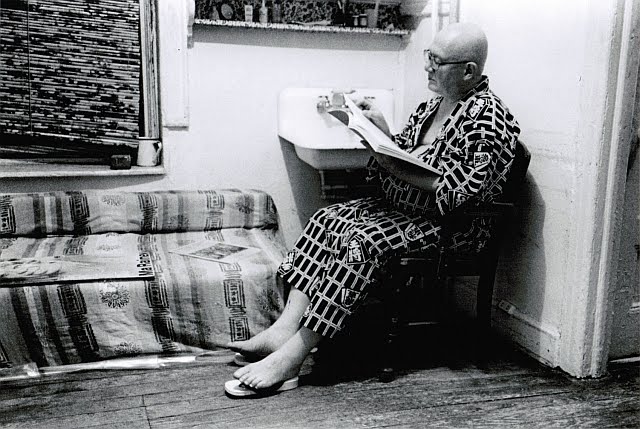
Philip Whalen (1923-2002) (EPC page)
Whalen in Hoover
Leslie Scalapino introduction to Collected
Poetry Fdn intro
LION bio [many poems at LION]
DLB/Gale intro
Mark Other Place, a chapbook
"True Confessions", illustrated by Keith Abbott
"Sourdough Mountain Lookout"
"A Vision of the Bodhisattvas"
from Whalen's notebooks (Big Bridge, ed. Brian Unger)
John Berryman (1914-1972) (Poetry Fdn)
John
Berryman (MAPS):
"Dream
Songs" #1 (with audio), 4
from Poetry Fdn: Dream Song 29 (commentary)
Eleven Addresses to the Lord, Homage to Mistress Bradstreet
Dream Song #14 ("Life, friends, is boring") text, youtube (recites poem starting at 4:23); commentary
Whalen wrote poems "in the moment" and noting the ephemeral nature of the moment. What do you think of this approach, that some might find anti-literary or even without form or defined subject and message. Do poems need to have a message? Do these poems. What about the connection to Zen or to meditation? Comment on Scalapino's introduction. Do you see a connection between Whalen and Eigner? O'Hara? How 'bout vernaculatr inWhalen? How about masculinism?
Compare and contrast, like they say, the two poets. What is Whalen's attitude toward everyday life, his philosophy of living/being? Address the informal/spontaneous nature of his style, its seeming lack of received form or high literary style. Now consider those questions in relation to Berryman and his more theatrical or dramatic approach and his use of persona and literary devices. Who comes closer to Ameircan vernacular speach? Who comes closer to thought?As you can see from the commentaries, Berryman was hailed by the literary establishment (for example Robert Lowell); Whalen, in contrast, had his following in the 60s "counterculture." This epitimizes the so-called raw vs cooked "poetry wars." Do these contrast seem relevant today? Do you feel you need to take a side? If so, which one?
7. (Feb. 27 and March 1) Gwendolyn Brooks, Robert Lowell, Elizabeth Bishop
7A (Feb. 27)
Gwendolyn Brooks (1917-2000)
respondent: Amy, John George
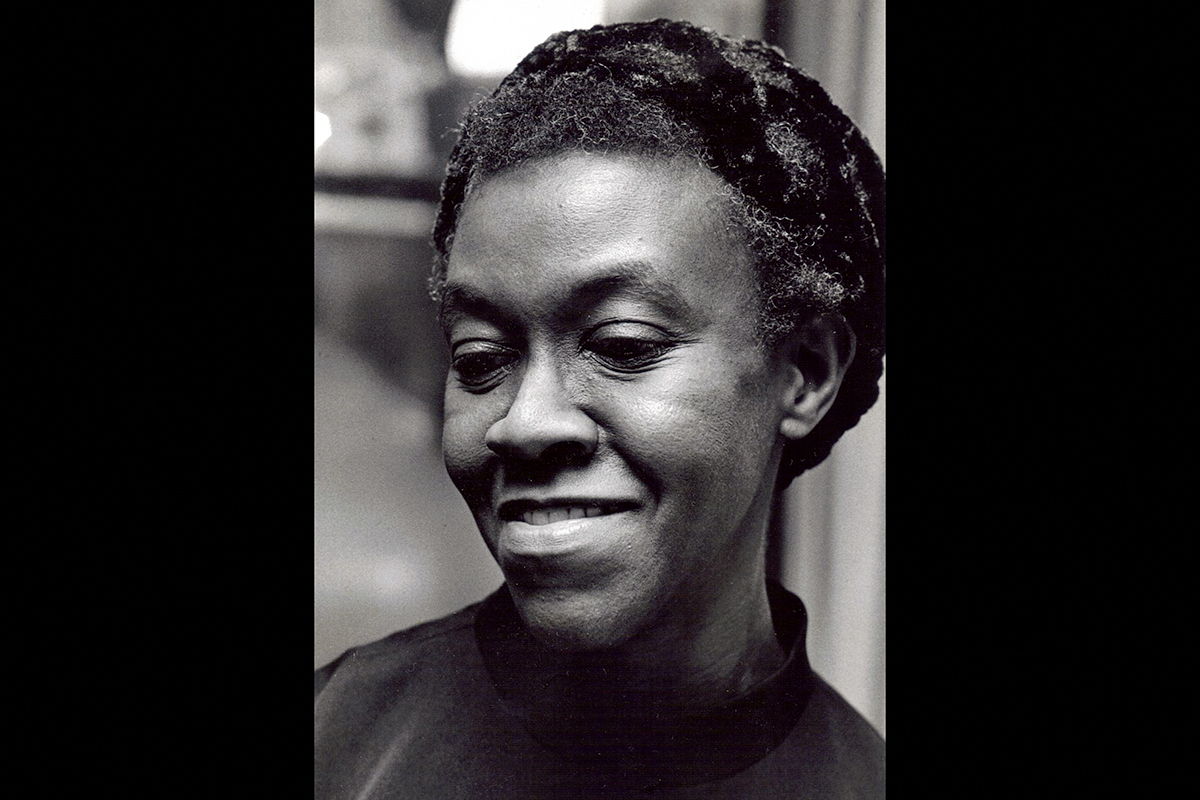
Brooks DLB intro
MAPS page
"The Ballad of Rudolph Reed"
"We Real Cool"
"Sermon in the Warpland"
"Primer for Blacks"
"Riot" (discussion of this poem here)
"The Lovers of the Poor"
"Boy Breaking Glass"
7B. (March 1)
Robert
Lowell (1917-1977)
respondent: Jackson
note extensive critical materials at Gale LRC
Poetry Foundation page
"Skunk
Hour" with though better audio here (PennKey req). and YouTube here
"For
the Union Dead; & audio
History
Man and Wife
"To Speak of Woe That Is in Marriage"
audio of "The
Public Garden" and the text of the poem
"Quaker Graveyard in Nantucket"; audio
additional
poems at Poets,Org
Lowell at SF State, 1957, audio
Elizabeth Bishop (1911-1979)
respondent: Jamie
"At the Fishouses"
"Sestina"
"Visits to St. Elizabeth's"
"One Art"
"The Man-Moth"
•For each poet, discuss what you find most distinctive. Use
the Poem Profiler. Summarize the forms used by each. Conrtrast those forms/styles to Black Mountain and NY School poets.
•List favorite/worst poems.
•What kind
of allusions are used by these poets?
•Note the mood or tone of several of the poems, citing specific
passages.
•Characterize the style of "Skunk Hour" (using poem profiler if helpful). Is their a "message" to the poem or is it more about mood or psychological state? What is the poem "about"? How does it compare to the poems of one or two of the poets read earlier?
•In what ways is Lowell's work reflective of his "identity" as heterosexual male "WASP." Does such an identity reading help or hinder the reading of his poems (or neither)?
•To what degree do these poems reflct the gender of their author? Would the poems mean the same thing if written by the opposite gender? Would Brooks poem mean the same thing if written by a white man? How about Lowell writing form the point of view of a woman in the marrigage poem: does it work? Is it still a male point of view? Would it mean something differnet if written by a woman?
•Brooks describes "The Battle of Adolf Reed" this way: "A man who has wanted to improve his family's environment moves into a previously all-white neighborhood. His neighbors are horrified by this intrusion. There is violence, and he is killed. Main feature--the great yearning of man-in-misery for betterment, and his eventual irresistible reach for it. Today, the general black decision would be that bandages are not enough. [Report from Part One. Detroit: Broadside Press, 1972.] How does the ballad form work in this poem? Why the ballad?
•What is Brook's attitude toward "the lovers of the poor"? Does it resemble's Emerson's remark in "Self-Reliance": "Then, again, do not tell me, as a good man did to-day, of my obligation to put all poor men in good situations. Are they my poor?" Is the poem ironic? How does the form work, eg how would this be different if written as an essay.
•Helen Adam also used ballad form? Is this anachronistic or innovative? How does she change/adapt the ballad? How does Adam's use of traditional ballads fit into the "postmodern" (open vs. closed forms) context of her poetry friends, such as Robert Duncan? Are these poems traditional? Are they "songs" or "poems" or what is formally significant (if anything) about that issue/question/distinction.
•Bishop's sestina was originally called "Early Sorrow." Discuss the use of traditional form in terms of the content of this poem and in the context of the readings this semester that have mostly moved away from such forms.
Wreading:
•Translations: Take one of Brooks poems and write it as an essay or story. Take one of Lowell's poems and write it in the manner of Projectivist or NY School poem. Take a Rich poem and write it from the point of view of a man (tranforming the content too).
•Recombine: take words and phrases from a poem and recombine
them to make a new poem. Use a web cut-up engine:Lazarus
cut-up engine to perform a similar task automatically; also
engines at "Language
Is a Virus:" Cut
Up Machine, Slice-n-Dice, Exquisite
Cadavulator, God's
Rude Wireless.
March 6/8: No Class (Spring Break)
Optional reading:
Denise Levertov,& James Wright & Richard Wilbur & Randell Jarrell
+++++++++++++++++++++++

Denise Levertov (1923-1997) (Poetry Fdn page)
DLB/Gale intro Anne Dewey (other essays also at Gale)
Hoover selection
Levertov Bio at data base "20th C. American Poets"
"Life at War" (Poetry Foundation); Ange Mlinko on Duncan's criticism of this poem at Poetry Foundation
Further reading (optional): Collected Early Poems; note: more Levertov at this site (20th Century American Poetry)
>>Discuss the dispute between Levertov and Duncan about "Life at War": what is Duncan's problem with this poem. Is he right?
James Wright:
A Note Left in Jimmy Leonard’s Shack
Autumn Begins in Martins Ferry, Ohio
Lying in a Hammock at William Duffy’s Farm in Pine Island, Minnesota
Richard Wilbur:
"In the Smoking Car," "Shame"
Randell Jarrell,
"Death
of the Ball Turret Gunner"
•This is mostly a reading assignment, of familiar poets, sometimes working in "closed" or more tradtional forms. Please do post something in response to the poets: what you like and what you dont. But also: sontrast the sytle of these four poets to the work of a few of the poets read earlier in the semester. Do you find the work more tradtional or conventional? More or less emotional? More or less formal? More linear? How about the use of line. How about the disction / relatiion to spoken American English (vernacular). Use poem profiler terms for this contrast.
8A. (March. 13) Michael Palmer
reading at 6pm KHW; class visit
required book: Codes Appearing (New Directions)
in addition to usual journal response, please prepare two questions for Palmer. The class will be structured by these questions, as we go around the table.
wiki
PennSound
8B. (March 13) BARAKA
respondent: Mike

Amiri Baraka (1934 - )
Hoover poetry and poetics
Gale intro
Larry Neil on the Black Arts Movement
Baraka
at PennSound
WJ Harris on Baraka Selected ; Claudia Rankine on Selected.
here's a brief selected from diff. periods, all from LION:
"Preface to a 20 Volume Suicide Note", "Notes for Speech""Black Dada Nihilismus" [MAP on poem] audio& DJ Spooky mix): note text of poem in in YouTube info section (fm Preface to a 20 Vol. Suicide Note, 1957)
"The Politics of Rich Painters", "Duncan Spoke of A Process", "Political Poem", "A Poem for Speculative Hipsters" (audio) (Dead Lecturer 1964)
"Black Art" [MAP on the poem], "Ka 'Ba", "Poem for Half-White College Students" (audio) from Black Arts '65/'66
"It's Nation Time" (1970)
"Today" "At the National Black Assembly" from Hard Facts (mid 1975)
Am/Trak (1979)
"Afro-American Lyric" (1979, frm Poetry for the Advanced)
"Lowcoup" (he later used "Lowku" "Blue Monk" from Funk Lore 1996
"Somebody Blew Up America" (2001) and YouTube & this
Further reading: Baraka on Norton anthology of African-American poetry
•Discuss Baraka's performances in terms of its
political and racial forms and contents; what is the social meaning
of the rhythms?
•What is the politics of
the choice of forms? Is it possible to consider Baraka’s form/style/rhetoric apart from its content? Can invective (not the same as anger) be considered an aesthetic that gives pleasure (maybe not if you feel you are the subject of the invective or maybe so anyway)? Is it possible to like a poetry primarily because of the political views expressed, or to like it irrespective of those views, or to necessarily dislike poems who views you dislike? Is it useful to read Baraka’s poetry as part of the political history he tracks, responds to, transforms, as a way to understand this political history? Thinking of a number of provocative poems read so far this semester: is it better to react viscerally (including negatively) to the provocations or to aestheticize or historicize them?
•Compare Baraka to other poets of the period in terms of the way they resond to racism or anti-Semitism, or sexism, or Olson's criticism of American culture, with special reference to the styles they adopt and the tones they use.
9. (March 20/22)
9A (March 20) Eigner
respondent: Jackson
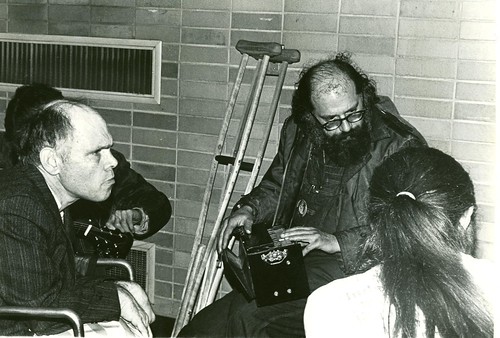
Eigner with Ginsberg
Larry Eigner (1927-1996) (EPC page)
Eigner in Hoover
Eigner autbiography
Bernstein Eigner intro
Grenier Eigner intro
Ben Frieldlander's intro at DLB/Gale
My intro to early Eigner: "Eigner's Fierce Calculus" and discussion, Jacket 2
Eigner
on PennSound (listen to "Again dawn," and comment, sections 1 and 2)
2 50s poems ("From the Sustaining Air" & "so what if mankind dies?")
from Another Time in Fragments
Eigner in L=A=N=G=U=A=G=E #1 at Eclipse
Michael Davison on Eigner and disability.
Eigner is a poet of the everyday/common: describe how
he articulates this. He was also confined to wheelchair all his
life due to cerebral palsy: is this something reflected in the
poems? Make a list of the nouns, verbs, adverbs, and adjectives
in one or more of the poems. Does this list tell you anything
about the work? Read one of the poems out loud three or more
times with different tempos and volume (best if this can be done
with someone else): describe the results.
Whalen wrote poems "in the moment" and noting the ephemeral nature of the moment. What do you think of this approach, that some might find anti-literary or even without form or defined subject and message. Do poems need to have a message? Do these poems. What about the connection to Zen or to meditation? Comment on Scalapino's introduction.
How 'bout vernaculatr in Eigner? How about masculinism?
Wreading:
•No wave. Retype the target work, without making any changes. Pay special attention to the spacing!
Proofread for accuracy. Reflect on the process.
•Imitate and Eigner or Whalen poem.
•Translate a Whalen poem into a more conventional stanzaic poem with clear message and more heightened poetic diction (formal rather than informal) (flush left, though free verse is fine).
•Substitution (1) : "Mad libs." Take a poem and
put blanks in place of three or four words in each line, noting
the part of speech under each blank. Fill in the blanks being
sure not to recall the original context.
::Be sure to comment on your results.
Susan Schultz at KWH, March 21, at noon
Tonya Foster at KWH, March 22 at 7pm
9B: March 22 Helen Adam (1909-1993)
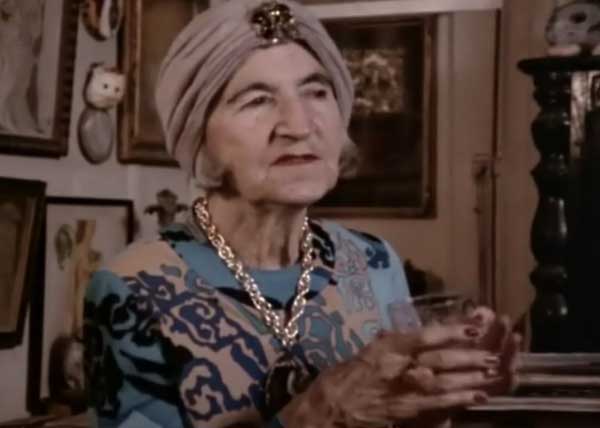
at PennSound: Susan Howe's Pacifica Radio Program, 1977-1978 performing her work, and in conversation with Susan Howe and Charles Ruas, one hour: MP3
& these poems: Fair Young Wife, The House o’ the Mirror, A Tale Best Forgotten, Counting Out Rhyme, Song for a Sea Tower, Fair Young Wife, Miss Laura, The Chestnut Tree, Cheerless Junkie’s Song (watch on YouTube)
PIP page
March 26 Bernadette Mayer, 6:30pm KWH: Must RSVP: whfellow@writing.upenn.edu
10. (March 27 and 29): Ginsberg, Kerouac, Corso

Corso & Ginsberg
Allen Ginsberg
Respondent: Arundati
Hoover: poems and poetics
Ginsberg
at PennSound: "Howl" (start with earlier recordings), poss. the first reading on the site.
Ginsberg poems on-line:
"America"
Howl,
Parts I & II, "Howl" text from LION, from PtryFdn
"Footnote to Howl" (or at LION) (PtryFdn); & audio: MP3 (1959)
A
Supermarket in California
"Witchita
Vortex Sutra" [LION]
"Kaddish" [LION] "Kaddish" (PtryFdn)
"Sunflower Sutra"
"Lion for Real"
Further Reading/listening:
John Cage's "Writing
through Howl"
see also Naropa
Audio Archive, AllenGinsberg.Org
Poetry Fdn page
Does this poem have a purpose? Does it have aspects of rhetoric? Other questions: - Consider how controversial the language of “Howl” became. Is it the language of post-modern America? Does his vulgar language have poetic value? - A lot of the incidents Ginsberg describes are autobiographical? Do we need to know Ginsberg’s biography to really appreciate “Howl” (I think this is the case with Plath)? How does Ginsberg being gay play into the poem? Is this similar to identity poetics, or is it something else? - In what ways is this poem revolutionary? Is it more about the form or the content, or the way the two interact?
- Does Ginsberg successfully evoke “Eastern” ideals - Are his later poems any different than his early poems? - What is the “point” of his poems – is it to change language, or the nature of discourse? If so, are his poems effective?
Jack Kerouac
Respondent: Alden

in Hoover
Kerouac audio: esp. "Blues & Haiku"
Kerouac (protected)--
"Charlie Parker" with Steve Allen
"American Haiku" (free version on YouTube) (with Al Cohn and Zoot Sims.): text
& on Steve Allen (YouTube)
cf: "Some Western Haiku & more
"Haiku Berkeley"
Kerouac Paris Review Interview (1968)
Kerouac on Buckley
further reading: Poetry Fnd selection and bio
Mexico City Blues (Penn only)
Does the improvisational rhythm of the words contribute more to the effect of the performance than the meaning of the language itself? How does the extra atmosphere/mood created by the musical portion of the performance alter the meaning/resonance of the haiku?
::How much does the icon of the Beats inform or overhadow K's work?
Gregory Corso (1930-2001)
Corso on PennSound
Gale intro
in Hoover
Creeley on Corso, including "The Whole Mess"
"Writ on the Eve of My 32nd Birthday" (cache)
"Marriage" (audio via YouTube)
respondent: John George
•Write your own commentary on any one of the poems, giving
as much styllistic and formal detail as possible.
•Compare the experience of listening to the recordings to reading the work on the page. In other
words: discuss the performances.
•Kerouac and Ginsberg (like Whalen) is strongly influencesd (at some points in their life!) by Zen Buddhism. How does this manifest itself in their work; how it is contradicated in their work?
•Improvisation is another strong feature of all three poets: how does this show up in the work. What is the relation of jazz?
•Compare these three poets to Creeley or Guest or Schuyler or Ashbery?
•All three are associated with the counter culture of the 60s: how is this manifest in the style of thier poems?
Wreading:
•Write an imitation of “Howl” taking place in the present time.
•Substitution (2): "7 up or down." Take a poem
and substitute another word for every noun, adjective, adverb,
and verb; determine the substitute word by looking up the index
word in the dictionary and going 7 up or down, or one more, until
you get a syntactically suitable replacement.
Optional/extension
Tuli Kupferberg (1923-2010): (Back to the 1960s II)
Kupferg is from the prevous generation in terms of the other poets in this course. Included here to provide some context for other work presented. For context see English 288.
"Morning" -- Fugs performance (with text); text
1001 Ways to Beat the Draft (1966)
Kupferberg on PennSound
From No Deposit / No Return (full LP on Spotify)
Social Studies
Hidden Dissuaders
Lifetime Guarantee [requires PennKey -- let me know if problem accessing]
Purina [requires PennKey -- let me know if problem accessing]
No Deposit, No Return [requires PennKey -- let me know if problem accessing]
Kupferberg frames each of the spoken word pieces in No Deposit, No Return as poems, by imaginary poets. Why? How abut 1000 Ways to Beat the Draft: what changes when that is viewed as a poem rather than prose satire. Are these works ironic, satiric, political, formal? What poetic forms are used? What is the politics? What is the relation of the politics to the form. Discuss "Morning."
11. (April 3/5) John Cage and Jackson Mac Low; Wiliam Burroughs, &&
Intro to Cut-ups:
William
Burroughs on cut-ups & Brion
Gysin on cut-ups
Burroughs/Gysin "Minutes to Go"
William
Burroughs on cut-ups & Brion
Gysin on cut-ups; pdf of full Third Mind
more Burroughs
The Ticket That Exploded
Burroughs, The Dead Star
John Cage (wiki)
respondent: Amy
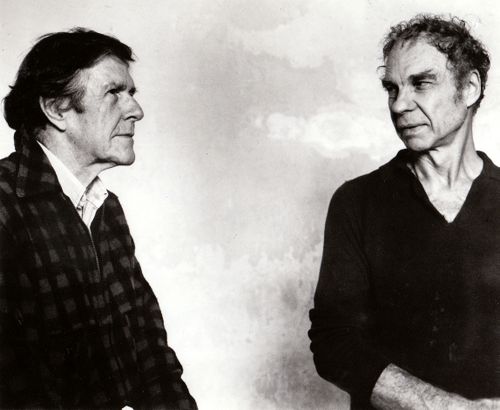
Cage & Merce Cunningham
in
Hoover
4'33": David Tudor/YouTube; Symphony
"Lecture on Nothing" (1959):: LION (note: use the graphic pages rather than the plain text)
"Indeterminacy" #6;
futher reading (optional): full web version of work
Silence: full text: go to "Lecture on Nothing"
Perloff on Silence
Mac Low:

respondent: Kelly
my intro
Hoover selection
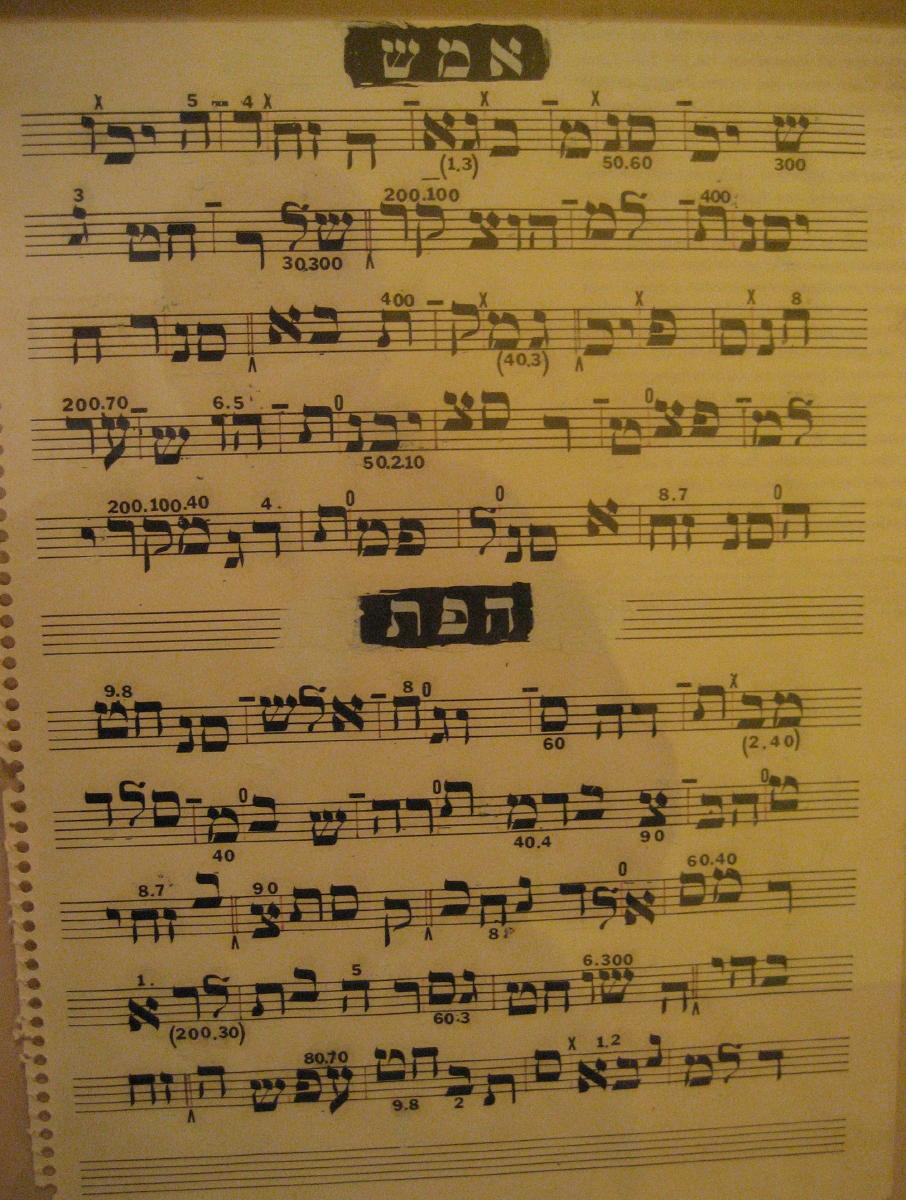
3d Biblical Poem (1955) and brief account here
Selection from Representative Works, plus "Word en Ends from Ez"
On vocabulary for Peter Innisfree Moore via Eng. 88 & the poem: 1 and 2
DLB intro
*
Mac
Low audio at PennSound:
LINEbreak
"Black Tarantula
Gatha"(scroll down)
recommended: Radio Reading Project
Poem Talk on "Word en Ends from Ez"
Further reading (optional):intro to cut-ups:
Bern Porter (1911-2004)
Respondent: Alden
Bern Porter: five books from the 1960s; Jena Osman on Porter
Wallace Berman, Untitled
(Music), 1974; letraset
Mary Ellen Solt, "Forsythia," "waterefall" (1973)and
more at UBU
David Smith, "The
Letter" (1950)
Robert Smithson, "A
Heap of Language" (1966); commentary by Richard
Sieburth
Arakawa / Gins: "Memory
of Meaning" , Mechanism
of Meaning (no longer avail.)
•What happens to originality when poems are composed of “found” material,
as in Mac Low and Cage. What happens to intentionality if poems
are composed by systematic procedures? Is this a good thing?
•Discuss the poetics articulated by the poets in their LINEbreak
interview by Mac Low and by Cage in the "Lecture on Nothing" and in the Hooever Poetics section. What does Cage mean by "nothing"?
•Compare reading vs. hearing the poets.
•What is the role of performance in these works? (same questions for following poets ...)
•Acrostic chance: Use the anthology or assigned books as your source
text. Use title of book or poem as acrostic key phrase. For
each letter of key phrase go to page number in book that corresponds
(a=1, z=26) and copy as first line of poem from the first word
that begins with that letter to end of line or sentence. Continue
through all key letters, leaving stanza breaks to mark each new
key word. (Cf.: Jackson Mac Low's Stanzas for Iris Lezak.) Variations
include using author's name as code for reading through her or
his work, using your own or friend's name, picking different
kinds of books for this process, devising alternative acrostic
procedures.
Note: Lazarus
cut-up engine to perform a similar task automatically; also
engines at "Language
Is a Virus:" Cut
Up Machine, Slice-n-Dice, Exquisite
Cadavulator, God's
Rude Wireless.

12. (April 10/12)
(April 10) Eduardo ESPINA class visit.
some poems in translation
bilingual poems
Interview
optional: Spanish only, video; S./N: NewWorldPoetics (a magazine I edited with Espina)
Comment as always but prepare two quesations for Espina.
ESPINA AT KWH at 6pm (I will be introducing and in conversation with Espina)
12B (April 12). Wieners, Berrigan
John Wieners (1934-2002)
intro
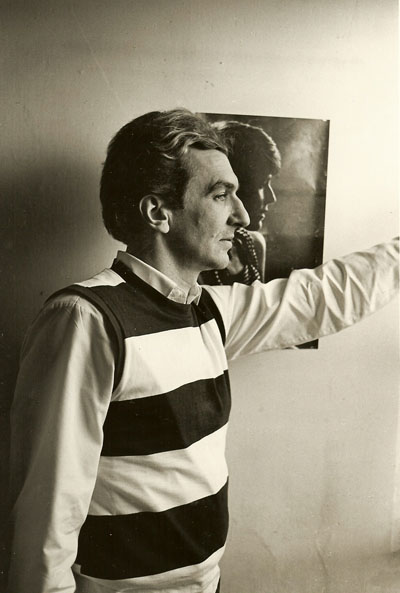
respondent: Kelly
"A Poem for Painters" (9:44) MP3, Text of final two sections only, last few minutes of recording; full poem (also in Messerli selection below)
Weiners on PennSound
"A Poem for Trapped Things" (also at LION)
EPC selection
Messerli selection: pdf
Poetery Fdn: "A Poem for Record Players" & other poems in the selection
LION has a full selection.
Ted Berrigan (1934-1983)
Respondent: Alden
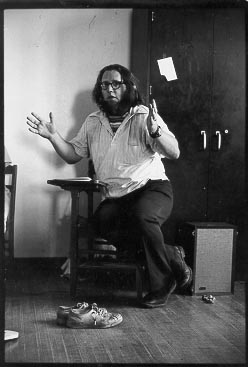
in Hoover
Berrigan: good intro at Poetry Foundation page, Hoover selection, plus:
"Things to Do on Speed," p. 360 of the Collected
Tambourine Life, p. 120 of Collected
Optional/Further reading:
David Bromige (1933-2009)
Bromige:from My Life and interview; Selection, plus "My Daddy's at His Office Now"
Bromige at PennSound:
My Poetry (5:25) MP3
My Compensations (26:24) MP3
Ronald Johnson (1935-1998)
Poetry Fdn pg
Selinger intro
from Ark (further reading: Ark 55)
from Paradise Lost: erased pages of Milton poem
Further reading by Johnson (optional):
BEAMS 21, 22, 23, the Song of Orpheus
BEAM 30, the Garden from ARK: The Foundations (1980)
from The Shrubberies (2001) + another
Reading at Stanford University, November 19, 1989: (47:26): MP3
•Discuss the forms of the poems.
•Paraphrase one of the poems (prose summary of content) and contrast to the way the poem works/say differently than the paraphrase.
•Go back to key poem profiler terms and profile each of these poets -- not filling out the form but summarizing the results.
•Provide a close reading / commentary of one or two of the poems, based on issues discussed in the seminar.
•What are John Weiner's sexual politics and what does his style have to do with it?
•How would you situatate Berrigan in terms of the poets read in this seminar?
Wreading::
Write a Berrigan-like sonnet or two, pouching material exclusively
from the semester's readings.
Do an imitation of one of the poems, bringing it into your own life.
•If you read it: Discuss the visual dimension of the Ronald Johnson poems. Erasure is an active poetic technique in radi os? How is this possible?
Wreading:
Apply Johnson's erasure approach to one of the others for this week.
13A. (April 17) Jerome Rothenberg
respondent: Jamie (though continuing with Berrigan via Alden to start)
Jerome Rothenberg (1931 - )
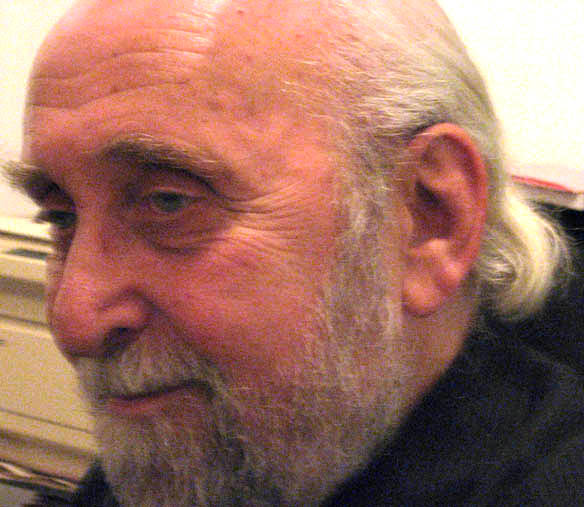
my introduction to Trilogy
Ariel Resnikoff interivew in Wolf magazine (2014), mosty on Jewshnesses.
Hoover selection and poetics
The Burning Babe & Other Poems, with poems by Jerome Rothenberg (Granary Books, 2005): complete book (pdf)
Poland/1931(via Twentieth Century American Poetry): "The Wedding" (first poem) and "Cokboy" (p. 143)
"That Dada Strain": pre-face, title poem (p. 3), & "The Suicide of Dada" (p. 24)
Khurbn (via Twentieth Century American Poetry): first eight poems
Rothenberg
at PennSound: start with LINEbreak and the "Horse Songs" as well as reading from the Tryptych.|
Rothenberg, "Total Translation" essay, in regard to "Horse Songs" above
Technicians of the Sacred: browse!
Jed Rasula on Rothenberg (Gale)
RainTaxi interview (2009)
•Rothenberg used the term "deep image" for some of his early work, suggesting a connection to a "deep" (not surface) expressionist aesthetic. Discuss the nature of "depth" in his poetry and detail some of the images he uses in a specific poem.
•On Poland/1931: discuss the odd juxtaposition of cowboy and Eastern Europen rabbi. Is there a Jewish idenity poetics connected to this poem. Is it like the idenity poetics dicussed last week? Can you as a reader "identify" with the poems/poet?
•For Khurbn: how is it possible to represent/respond to the events evoked here? Is any writing able to do this? How does Rothenberg approach this troubled question?
•Discuss the way "total translation works in "Horse Songs"
•for Rothenberg's Babe: How do the images relate to the poems in the Granary book?
•Discuss a particular performance of Rothenberg on PennSound. How does reading on the page compare to listening. Describe Rothenberg's performance style compared to a few of the other poets you've listened to so far this semester.
•Discuss the forms of the poems. Compare the forms and styles from different books: what do they have in common, what different? For example That Dada Strain is quite different than the other works, in some ways.
•Which poems did you like best? least? Why?
Wreading:
•Homolinguistic translation: Take a poem and translate it "English
to English" by substituting word for word, phrase for phrase,
line for line, or "free" translation as response to each phrase
or sentence. Or translate the poem into another literary style
or a different diction, for example into -- or out of -- a slang
or vernacular.
•Do a precice paraphrase of one of the poems. What is the difference between that and the poem?
::Be sure to comment on your results and post to the listserv.
Further reading (optional):
Armand Schwerner, selections from The Tablets (recommended I and II); audio on PennSound
13B. (April 19) Hannah Weiner
respondent: Mike
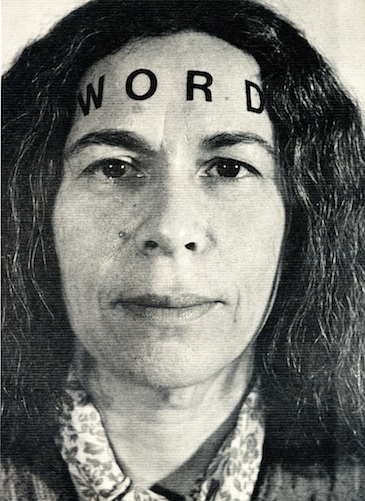
my intro(late) and early
Weiner in Hoover
Weiner
at PennSound:
March MP3 (26:48) Note: text begins here in EPC digital edition: follow along!
recommended: LINEbreak interview, Niblock film, reading/listening in/around EPC and PennSound pages ...
Further reading: Joyelle McSweeney, Disabled Texts and the Threat of Hannah Weiner in boundary 2 (2009) (search by title) or try this link
Is The Clairvoyant Journal extending the diary/journal genre or doing something else? How would you describe Weiner's subject matter? Is that suitable material for poetry? What is the role of performance in this work? What role does voice play in the work? How does Weiner's use of three voices relate to some of the other poets read this semester?
Wreading: Write your response in a three-voice Weiner-like narrative. Incorporate your everyday life as it interrupts your narrative. Perform with friends.
14. (April 24 Last Class): David Antin

respondent: Mike
Antin at PennSound (recordings, see eg his KWH talk on Freud as poet; see his sky writing poems video)
David Antin: “Hiccups” – pdf, audio (search for C324)
>The Principle of Fit, II (1980) (Part I) (26:32): MP3
>The Principle of Fit, II (Part II) (25:49): MP3
>A Conversation with David Antin, questions from Penn students (2004) (1:11:21) MP3
Antin in Hoover
"What It Means to Be Avant-Garde"
from Tuning (New Directions, 1984)
"Real Estate" from Tuning (1984)
"Words to the Wise" (2009)
recommended:
Conversation with David Antin by Antin and Charles Bernstein (pdf of full book)
"Modernism and Postmodernism in Contemporary Poetry" boundary 2, 1972, via JSTOR; or Penn only pdf
"Some Questions about Modernism"" (1974)
•Are Antin’s works poems?
•What is the role of performance in his works?
•What is the difference in listening to his talks on tape and reading the work
•Why does he transcribe the work the way he does (rather than conventional prose format)
•Are the works narrative? How do the difference parts or anecdotes make a whole?
Wreading::
Talk poem: record yourself talking a poem and transcribe.
As a final optional submission, please give your response to the course, which exercises and questions you found most helpful, what was your reaction to posting all your work to the list? What about the amount of reading required for each class? Enough? Too Much? What did you like least about the course, what most (what would you like more of, or less of)? Thinking back on all the poets, list your overall favorites and state your reason for your preference.
please try to have all work completed by the last class or email me for extension.